 Nuvo Platform
 Nuvo Intelligence
 Customer Onboarding
 Portfolio Management
 Vendor Onboarding
 Accounts Receivable
 Alcohol & Beverage
 Apparel
 Building Materials
 Chemicals
 Distribution
 Food Service
 Heavy Equipment
 Manufacturing



Loading

NetNow worked for years. It handled basic credit reporting, reference tracking, and a centralized place to store customer data. But if you're reading this, you already know it's not keeping up anymore.
The gap is specific: Sales expects credit decisions in hours, not days. Your ERP pulls live data from a dozen sources. Your CFO wants real-time exposure visibility. Meanwhile, NetNow still requires manual bank reference chasing and toggling between three screens to assess credit risk.
That's why credit managers and CFOs are actively evaluating NetNow alternatives.
Manual reference collection adds days to every approval cycle. That's time your sales team doesn't have when a competitor can approve the same customer overnight. Without real-time bank connectivity, you're making decisions on financial snapshots that might be 60 or 90 days old.
Your data lives in silos. Credit bureau pulls sit in one place, trade references in another, and internal payment history somewhere else. Every decision requires pulling fragments from disconnected sources. Every delay costs you either revenue or risk management exposure.
The shift toward digital infrastructure in B2B trade isn't optional anymore. Your competitors are approving customers faster. Your finance team is demanding tighter risk controls. That's operational survival.
The right alternative should eliminate bottlenecks, connect your data sources, and give you decision-ready insights without the workarounds. Here's how the leading platforms stack up.
Nuvo unifies customer onboarding, risk assessment, and decisioning into a single automated workflow. Instead of juggling disconnected tools for applications, bank verification, and credit bureau pulls, you get one platform that connects directly to live data sources and delivers instant risk signals.

Best for: Nuvo is purpose-built for B2B trade credit, so if you need a general-purpose accounting or collections platform, you'll still need complementary tools for AR management. If your credit team is still tracking down references by phone or waiting days for bank responses, Nuvo's automated onboarding platform is worth a close look.
Dun & Bradstreet's Finance Analytics platform is built on its proprietary commercial database, which includes over 500 million business records globally. It's a strong choice if your credit decisions rely heavily on D&B scores and you need deep historical data on business entities.

Best for: D&B's strength is established businesses with long credit histories. For newer companies or thin-file applicants, you'll still need to supplement with bank references or alternative data sources. Pricing is built for enterprise scale, which can be difficult to justify for smaller credit teams.
Serrala is an enterprise-grade treasury and working capital platform with credit and collections process capabilities built into a broader financial services suite. If your organization already uses Serrala for treasury or cash management, the credit module can offer workflow continuity within a single vendor ecosystem.
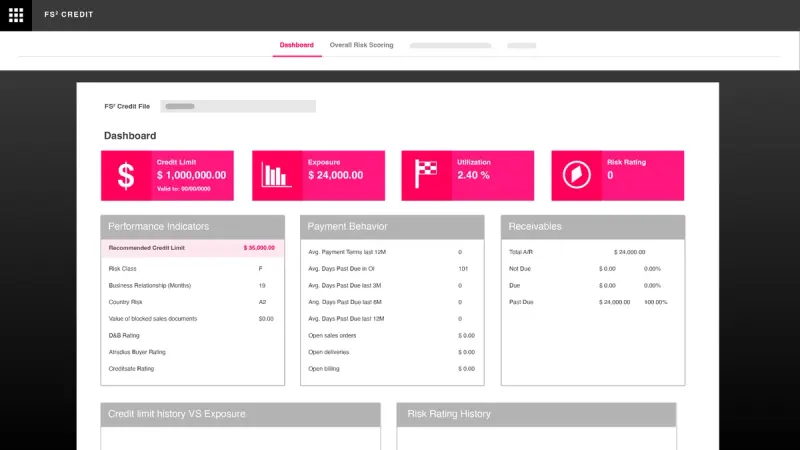
Best for: Serrala works well when credit management is one piece of a larger treasury system rollout. Its strength is treasury and AR breadth rather than B2B onboarding automation, with bank verification and cash flow underwriting typically handled by integrated point solutions rather than native to the platform.
Experian brings one of the largest commercial credit databases in the world to B2B credit risk management. The platform works for credit teams that need depth on established businesses, particularly when bureau-backed data carries significant weight in your informed decisions.
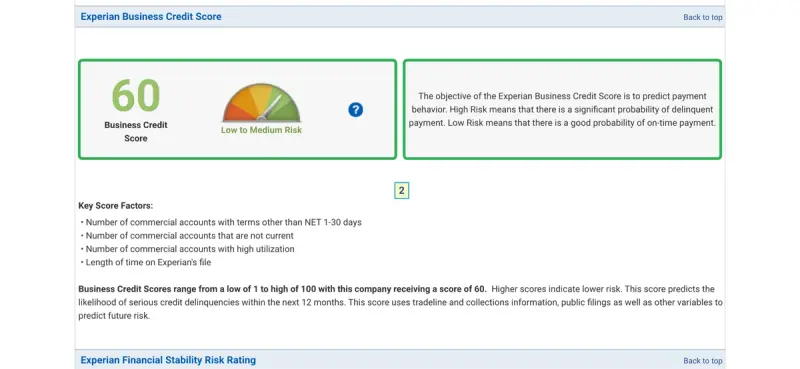
Best for: Experian works well if you're working with established B2B customers who have documented credit histories. Newer or smaller businesses get thinner coverage, and pricing escalates quickly at high report volumes. You'll still need manual reference collection, just like with D&B.
Scienaptic is an AI-powered credit decisioning platform for lenders who want to move beyond traditional scoring models. It uses machine learning and alternative data to assess creditworthiness, particularly for applicants without established credit histories.
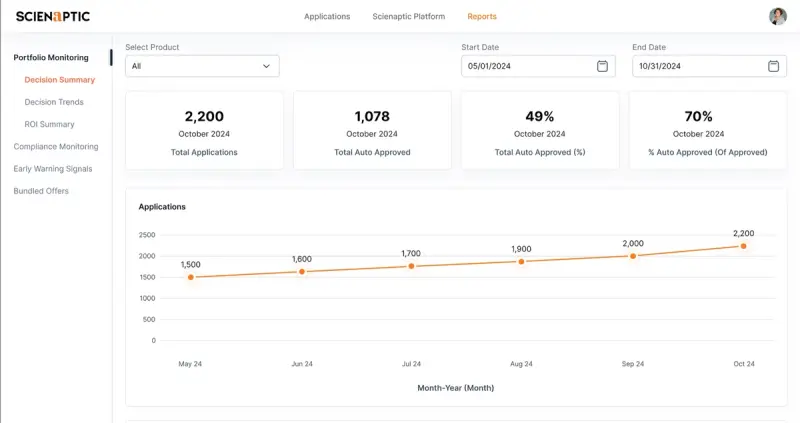
Best for: If you're modernizing decisioning with artificial intelligence and have the technical resources to support implementation. The platform requires significant historical data to train effective models and is built for high-volume lenders, not distributors or manufacturers.
You've probably already narrowed your list to three or four platforms. The real question is which one actually solves the problems you're dealing with today.
Every vendor will tell you they integrate with your ERP. What matters is how deep that integration goes.
The difference between a shallow integration and a deep one is the difference between saving an hour a week and eliminating an entire category of work.
A platform that automates credit scoring but still requires you to manually source bank references hasn't solved your problem. It's just shifted where the bottleneck lives.
Factor in implementation costs, training time, and the ongoing effort required to maintain the system.
The best platforms surface risk signals automatically, flag inconsistencies across data sources, and give you a clear recommendation with the context to override it if needed.
Modern credit management should be collaborative, data-rich, and instantly decision-ready, rather than reliant on manual, periodic reviews that slow down both your team and your customers.
You've decided to move on from NetNow. Now comes the part that keeps credit managers up at night: actually making the switch without disrupting your approval pipeline or losing months to implementation.
Most credit platform migrations follow a predictable arc. The duration depends on how fragmented your current setup is.
Realistic timeline: 8 to 16 weeks from kickoff to full production use. Platforms with pre-built ERP connectors and automated trade reference handling can compress this.
The bottleneck usually comes from incomplete data exports from NetNow, unclear ownership of integration tasks between IT and Finance, or underestimating how many manual processes need to be rebuilt as automated workflows.
Your team doesn't need to become platform experts overnight. Training should focus on the specific tasks they perform daily: reviewing applications, pulling credit data, setting terms, and communicating decisions.
Start with role-based sessions:
Plan for a two-week ramp. Week one covers core workflows and system navigation. Week two focuses on exceptions, ERP or CRM integrations, and any custom rules you've built into the platform. Most teams are productive within two weeks. The payoff shows up immediately in faster approvals and fewer manual errors.
When you move off NetNow, the goal is faster approvals and a credit operation that doesn't require constant firefighting. No more tracking down illegible bank references days after sales promised to ship. No more explaining to your CFO why you can't give real-time exposure visibility. No more being the bottleneck between a signed contract and an invoice.
A decision-ready credit desk means your team spends time on judgment calls, not data entry. Sales gets answers in hours because the platform already pulled the bank balances and verified the business. Real-time cash flow signals replace the two-week wait for a bank fax. Digital credit applications replace PDF forms that come back half-filled.
This is about decisions based on complete, current information, not whatever happened to arrive in your inbox by Thursday afternoon.
Want to explore better alternatives to NetNow? See how Nuvo can help replace the manual frustrations of legacy credit workflows with a system your whole team can actually trust.